
I have a working theory that a lot of my emotional development has been outsourced to films.
Not entirely, obviously. Good friends, occasional heartbreaks, cool parents, a reasonably normal upbringing. But if you made a pie chart of “Moments Where I Understood Something Important About Being Alive,” a worrying slice of it would involve fictional people saying things written by someone else, performed under lighting rigs, and watched with popcorn in the vicinity.
Which, when you think about it, is a bit absurd. And yet, here we are.
Roger Ebert once described movies as a machine that generates empathy. That sounds clinical until you sit in a dark room and find yourself emotionally invested in someone who doesn’t exist. Then it feels less like a machine and more like a kind of collective dreaming. A room full of strangers, quietly agreeing to feel the same thing at the same time.
Strange, because we spend most of our lives failing to understand even the people we actually know. Real conversations are cluttered with ego and timing and distraction. There’s no background score to tell you when something matters, no close-up to insist that you pay attention.
Films strip that away. Or at least, they pretend to. Someone has taken years of living, noticing, feeling, failing, and distilled it into two hours where the signal is unusually high and the noise is minimal.
And so you sit there, thinking you understand. Not just the character, but the feeling itself. Love looks like this. Loss feels like that. Courage arrives in this particular shape, usually a few beats after hesitation.
Maybe that’s why it works. Because it’s not entirely true, but it’s true enough. True enough that when something vaguely similar brushes up against your own life, you recognise it. Not perfectly, not completely, but just enough to pause and think, oh, this is that kind of moment.
Which is a small but meaningful thing. To notice your own life while you’re inside it.
So when Will, in Good Will Hunting, finally hears "It's not your fault" enough times for it to break through whatever he's spent twenty years building, it lands with a kind of force that real life rarely affords. Not because the line itself is particularly novel. Your barber could say it. It lands because of the way it arrives. Given exactly the weight it needs.
Or when Laila, in Zindagi Na Milegi Dobara, decides to get on a bike and chase Arjun down just so she can kiss him before he leaves, because the one thing she refuses to carry home is a regret. No overthinking, no self-protection, no hedging. Just a sudden clarity that this moment matters more than whatever comes after. And so she acts.
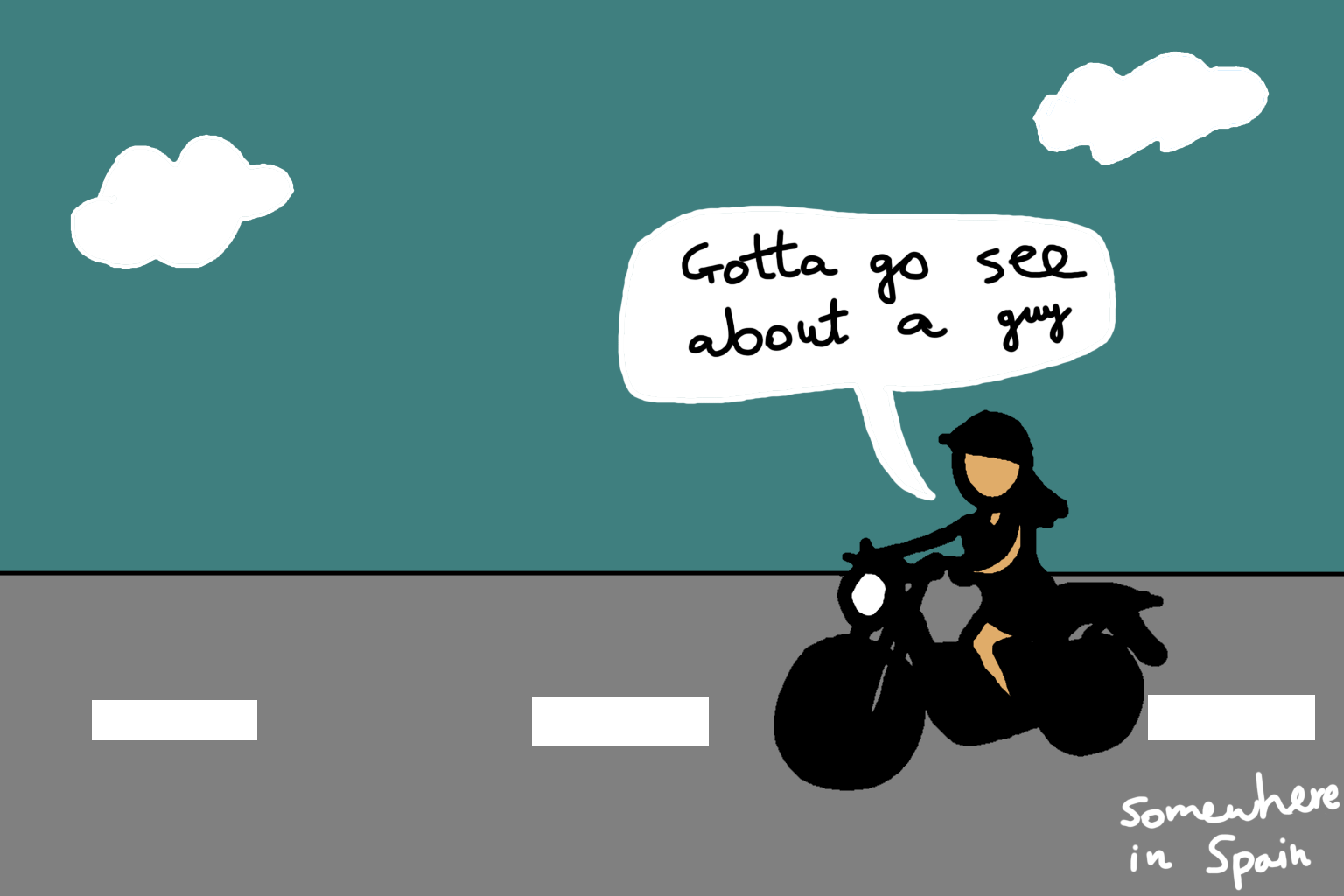
What ties these moments together is not drama in the conventional sense. It’s precision. Emotional timing that feels impossibly accurate. The right words, or the right action, delivered at exactly the point where resistance collapses.
In real life, we rarely get that luxury.
We say things too early, when the other person isn't ready to hear them. Or too late, when they've already moved on. We hesitate in the moment and then replay it endlessly later, constructing the perfect version of what we should have done. The mind is brilliant at editing reality after the fact, but painfully clumsy in real time. I have delivered some truly devastating comebacks in my life, all of them roughly six hours late.
Which is why these scenes stay with us. They compress what in life is messy and mistimed into something clean and inevitable. They give us the illusion that if we just feel strongly enough, or understand deeply enough, the moment will present itself and we will rise to meet it.
Taken straight, that illusion is a trap. And it’s a subtle one, because the trap is made of the same material as the gift. The templates that help you recognise a moment can quietly become the standard you grade it against. And graded against cinema, real moments always lose. They arrive unscored and unlit, dressed as ordinary Tuesday afternoons, and if you’re waiting for the swell and the close-up, you conclude this can’t be it, and let it pass.
The mistake isn’t carrying the templates. It’s forgetting they were built for recognition, not comparison.
So maybe the real takeaway isn’t that life should look like that. Maybe it’s that, occasionally, we can choose to act as if it could.
To say the thing a little before we’re fully ready. To show up without complete certainty. To take the small emotional risk instead of waiting for the perfect alignment that may never come.
Because while life may not hand us perfectly timed moments with cinematic precision, it does offer fragments of them. And more often than not, the difference isn’t the weight of the moment itself, but whether we’re willing to step into it when it arrives.
The movies already taught us how. We just need to show up.
PS - For all my love for cinema, I don’t think theatres make a great business. More on that here.
Loved this one!!!
Love this 💪💪💪